
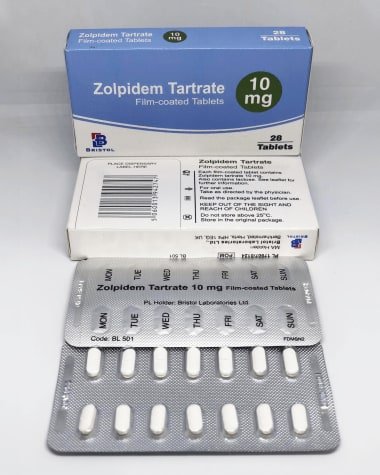
Zolpidem Tartrate 10mg USA


Zolpidem Tartrate 10mg is a prescription sedative-hypnotic medication, most commonly known by the brand name Ambien. It belongs to a class of drugs called “Z-drugs” (non-benzodiazepine hypnotics) and is specifically designed for the short-term treatment of insomnia characterized by difficulty falling asleep.
Zolpidem Tartrate 10mg: The Hypnotic That Redefined Sleep Medicine
Introduction
Zolpidem tartrate, most famously known by its original brand name Ambien, emerged in the early 1990s as a revolutionary force in sleep medicine. The 10mg tablet, a standard therapeutic dose, represented a pharmaceutical promise: effective sleep induction without the baggage of benzodiazepines. Marketed as a “Z-drug” or non-benzodiazepine hypnotic, zolpidem was heralded for its targeted mechanism, rapid onset, and supposedly lower risk of dependence and next-day effects. Decades later, its story is one of partial fulfillment and significant caution. While it did shift prescribing patterns away from traditional benzodiazepines for insomnia, zolpidem 10mg revealed its own unique and sometimes dangerous profile, including complex sleep behaviors and a distinct dependency syndrome. This 2000-word analysis provides a comprehensive examination of zolpidem tartrate 10mg, exploring its sophisticated pharmacology, primary use for insomnia, and the complex risk-benefit calculus that defines its place in modern therapeutics.Zolpidem Tartrate 10mg USA
Chemical and Pharmacological Profile
Class and “Non-Benzodiazepine” Distinction
Zolpidem is classified as an imidazopyridine, structurally distinct from the classic benzodiazepine backbone. This led to its early classification as a “non-benzodiazepine” hypnotic. This terminology, while useful for marketing, is pharmacologically misleading. A more accurate descriptor is a benzodiazepine receptor agonist.Zolpidem Tartrate 10mg USA
The GABA-A Receptor and Selective Binding: The ultimate target is the same: the GABA-A receptor complex, the brain’s primary inhibitory gateway. However, the GABA-A receptor is not a monolithic entity; it is composed of multiple subunits (e.g., α1, α2, α3, α5, β, γ). Different subunit compositions, found in different brain regions, mediate different effects.
-
Classical Benzodiazepines (e.g., diazepam): Bind non-selectively to a site on receptors containing α1, α2, α3, and α5 subunits. This widespread binding produces the full spectrum of effects: sedation (α1), anxiolysis (α2/α3), muscle relaxation, and anticonvulsant activity.
-
Zolpidem: Binds with high selectivity to the α1 subunit of the GABA-A receptor. The α1 subunit is predominantly associated with sedative-hypnotic effects. This selective binding is the cornerstone of zolpidem’s profile: potent sedation with theoretically reduced anxiolytic, muscle relaxant, and anticonvulsant properties at therapeutic doses.
Mechanism of Action: Like benzodiazepines, zolpidem is a positive allosteric modulator. It binds to its specific site on the α1-containing GABA-A receptor, enhancing the receptor’s affinity for GABA. This leads to a greater chloride influx and neuronal inhibition, but in a more anatomically restricted pattern, primarily in the brain regions involved in sleep-wake regulation.Zolpidem Tartrate 10mg USA
Pharmacokinetics: Engineered for Sleep Onset
The pharmacokinetics of zolpidem 10mg are meticulously designed for a single purpose: to induce sleep quickly and then get out of the way.
-
Absorption and Onset: Zolpidem is rapidly absorbed after oral administration, but its absorption is significantly slowed by food. Taken on an empty stomach, peak plasma concentrations occur within 1 to 2 hours. This rapid rise correlates with its swift hypnotic effect, typically within 15-30 minutes. This makes it specifically suited for sleep initiation insomnia.
-
Distribution: It is highly lipophilic, allowing it to cross the blood-brain barrier quickly.Zolpidem Tartrate 10mg USA
-
Metabolism: Zolpidem is extensively metabolized in the liver, primarily by the cytochrome P450 enzyme CYP3A4, with contributions from CYP2C9, CYP1A2, and CYP2D6. It has no active metabolites, a key difference from long-acting benzodiazepines like diazepam.
-
Elimination and Half-Life: Zolpidem has a short elimination half-life of approximately 2 to 3 hours. This is its critical feature.
-
Therapeutic Implication: It is effectively cleared from the system by the middle of the night, minimizing drug effect during the later sleep stages and aiming to reduce “hangover” sedation the next morning.
-
Therapeutic Limitation: It provides minimal efficacy for sleep maintenance insomnia (waking up in the middle of the night). A patient who wakes at 3 AM cannot take another dose, as it would not be cleared by morning, leading to dangerous residual sedation. This led to the development of extended-release formulations (Ambien CR).Zolpidem Tartrate 10mg USA
-
-
Gender and Age Considerations: Pharmacokinetic studies revealed that women and the elderly clear zolpidem more slowly, leading to higher plasma levels. This resulted in an FDA-mandated dose reduction for women (from 10mg to 5mg for the immediate-release tablet) and recommendations for lower starting doses in the elderly (5mg or less).
Clinical Applications and Therapeutic Use
The indication for zolpidem tartrate 10mg (and its lower doses) is singular and specific: the short-term treatment of insomnia characterized by difficulties with sleep initiation.
1. Primary Use: Sleep Initiation Insomnia
The 10mg dose (5mg for women, per FDA labeling) is the standard for adults under 65. It is explicitly for patients who have trouble falling asleep. Its rapid onset and short duration are perfectly tailored for this. The prescribing guidelines are emphatic about its limitations:Zolpidem Tartrate 10mg USA
-
Short-Term Duration: Treatment should be for the shortest duration necessary. The exact timeframe is debated but is generally considered to be a few days up to 2-4 weeks, with frequent re-evaluation. It is not intended for long-term, nightly use.
-
“As-Needed” (PRN) Dosing: The ideal use is intermittent—taken only on nights when insomnia is acute, rather than as a scheduled nightly medication. This “off-and-on” strategy helps mitigate tolerance and dependence.Zolpidem Tartrate 10mg USA
-
Bedtime-Plus Rule: It must be taken immediately before going to bed and only when the patient can commit to a full 7-8 hours of uninterrupted sleep. Taking it later, or with less time for sleep, drastically increases the risk of next-day impairment and complex behaviors.
2. The Reality of Off-Label Use
Despite its narrow indication, zolpidem is widely used off-label for sleep maintenance problems (though the extended-release form is more appropriate) and often continued far beyond recommended durations due to patient dependence and physician practice patterns.
Dosage and Administration
Precise dosing is critical for safety.
-
Standard Adult Dose (Men & Women per updated guidelines): 5mg or 10mg immediately before bedtime. Many clinicians now initiate at 5mg for all adults due to safety concerns.
-
FDA-Labeled Dose (Reflecting 2013 change): Men: 10mg. Women: 5mg. This is due to the finding that women metabolize zolpidem more slowly, leading to higher morning blood levels and increased risk of impaired driving.
-
Elderly or Debilitated Patients: 5mg is the recommended starting dose due to increased sensitivity and reduced clearance.Zolpidem Tartrate 10mg USA
-
Hepatic Impairment: Dose reduction to 5mg is mandatory.
-
Concomitant CNS Depressants: Extreme caution and dose reduction are required. Concomitant use with alcohol is explicitly warned against.
Side Effects and Adverse Reactions
The adverse effect profile of zolpidem is a mix of predictable CNS depression and unique, alarming idiosyncratic reactions.
Common Side Effects:
-
Central Nervous System: Next-day drowsiness (“hangover”), dizziness, headache, a “drugged” feeling. Anterograde amnesia (memory loss for events after taking the drug) is common.
-
Gastrointestinal: Diarrhea, nausea.
-
Sensory: Altered taste (dysgeusia).
Serious and Dangerous Adverse Effects:
1. Complex Sleep Behaviors: This is the most infamous and dangerous risk associated with zolpidem. Patients engage in activities while not fully awake, with no subsequent memory of the event. These behaviors are more common with zolpidem than with many other hypnotics and can occur with the first dose. They include:Zolpidem Tartrate 10mg USA
-
Sleep-driving: This has resulted in serious accidents, DUI arrests, and fatalities.
-
Sleep-walking and Sleep-eating (often consuming bizarre combinations of food).Zolpidem Tartrate 10mg USA
-
Making phone calls, having sex, preparing food, and other complex tasks.
The risk is increased with higher doses, concomitant alcohol or other CNS depressants, and taking the drug without allowing for a full night’s sleep. The FDA mandates a Boxed Warning for this risk.
2. CNS Depression and Respiratory Effects: While less potent than benzodiazepines as respiratory depressants, zolpidem can still cause significant CNS depression, especially when combined with other agents like alcohol, opioids, or antidepressants. This can lead to dangerous sedation and impaired breathing.Zolpidem Tartrate 10mg USA
3. Abnormal Thinking and Behavioral Changes: Paradoxical and disturbing psychiatric effects are well-documented. These can include:
-
Increased depression, suicidal ideation.
-
Agitation, aggression, bizarre behavior.
-
Visual and auditory hallucinations (often described as “Ambien hallucinations”).
-
Depersonalization and derealization.
4. Dependence and Withdrawal Syndrome: The initial marketing of zolpidem as “non-habit-forming” proved tragically false. Both physical dependence and psychological addiction occur.
-
Tolerance: The hypnotic effect can diminish within weeks, leading to dose escalation.Zolpidem Tartrate 10mg USA
-
Withdrawal: Abrupt discontinuation after regular use can cause rebound insomnia, anxiety, agitation, tremor, abdominal cramps, and in severe cases, seizures. Its short half-life means withdrawal symptoms can begin within 48 hours.
5. Next-Day Impairment: Despite its short half-life, residual impairment of motor and cognitive function is common, affecting driving ability, memory, and work performance. The “dose-with-gender” adjustment was a direct response to traffic accident data.Zolpidem Tartrate 10mg USA
Contraindications and Major Drug Interactions
Contraindications:
-
Known hypersensitivity to zolpidem.
-
Concurrent use with alcohol or other illicit CNS depressants.
-
History of complex sleep behaviors with zolpidem or other hypnotics.
-
Severe hepatic impairment.Zolpidem Tartrate 10mg USA
-
Respiratory depression, untreated sleep apnea, myasthenia gravis (relative contraindications due to muscle relaxation).
Major Drug Interactions:
As a CYP3A4 substrate, zolpidem is susceptible to numerous interactions.
-
CYP3A4 Inhibitors: Drugs like ketoconazole, itraconazole, clarithromycin, ritonavir, and grapefruit juice can dramatically increase zolpidem plasma levels, potentiating all its effects and risks.Zolpidem Tartrate 10mg USA
-
CYP3A4 Inducers: Drugs like rifampin, carbamazepine, and phenytoin can decrease zolpidem levels, potentially reducing efficacy.
-
Additive CNS Depressants: Alcohol, opioids, benzodiazepines, sedating antidepressants (trazodone, mirtazapine), antipsychotics, and antihistamines. These combinations are strongly discouraged due to the heightened risk of profound sedation, complex behaviors, and respiratory depression.
The Dependence and Withdrawal Challenge
The dependence potential of zolpidem is now unequivocally recognized and forms a central part of its risk profile. Dependence can develop insidiously, as patients and doctors mistake the return of insomnia upon discontinuation as proof of an ongoing need for the drug, rather than rebound insomnia—a core symptom of withdrawal.
Patterns of Misuse: Zolpidem has a significant abuse potential, particularly among individuals with a history of substance use disorder. It is sometimes used recreationally for its dissociative and hallucinogenic effects at high doses or when fought against (trying to stay awake after ingestion).
Management of Dependence: Discontinuing chronic zolpidem use requires a structured approach. Abrupt cessation is not recommended. A gradual taper is necessary, often switching to an equivalent dose of a longer-acting benzodiazepine (like diazepam) to smooth out the withdrawal process, followed by a slow reduction of that agent. Psychological support and implementation of Cognitive Behavioral Therapy for Insomnia (CBT-I) are essential to address the underlying sleep disorder.Zolpidem Tartrate 10mg USA
Societal Impact and Regulatory Evolution
Zolpidem’s launch marked a paradigm shift. It displaced benzodiazepines as the most prescribed hypnotic worldwide, based on its targeted action and perceived safety. However, post-marketing surveillance told a different story. Reports of sleep-driving, bizarre behaviors, and dependence flooded the FDA.Zolpidem Tartrate 10mg USA
Key regulatory responses included:
-
Boxed Warning for Complex Sleep Behaviors (added in 2007, strengthened thereafter).
-
Gender-Based Dosing Recommendation (2013): A landmark decision based on pharmacokinetic data, highlighting the importance of sex differences in drug metabolism.Zolpidem Tartrate 10mg USA
-
Recommendation for Lower Starting Doses across the board.
-
Strengthened Warnings about next-day impairment, especially for driving.
Zolpidem’s story fueled a broader skepticism about pharmacological solutions for chronic insomnia. It underscored that even “selective” drugs carry major risks when used to modulate the complex physiology of sleep. This has accelerated the move toward Cognitive Behavioral Therapy for Insomnia (CBT-I) as the undisputed first-line and gold-standard treatment, with medications like zolpidem relegated to a secondary, short-term role.Zolpidem Tartrate 10mg USA
Conclusion
Zolpidem tartrate 10mg is a pharmacologic marvel of targeted design that ultimately revealed the profound complexities and dangers of manipulating sleep pharmacologically. Its α1-subunit selectivity successfully uncoupled sedation from some other benzodiazepine effects, creating a potent sleep-inducing agent. However, its short half-life, while minimizing next-day residue for some, created a narrow therapeutic window vulnerable to misuse and timed-dose errors.
Its legacy is dual. It successfully moved prescribers away from the chronic use of long-acting benzodiazepines for insomnia, which was a net positive. Yet, it introduced new and frightening risks—most notably automatic, amnestic complex behaviors—that entered the public consciousness. It exposed the fallacy of “safe” hypnotics and highlighted that dependence is a function of GABA-receptor modulation, not merely chemical class.Zolpidem Tartrate 10mg USA
In current practice, zolpidem 10mg is a potent but strictly circumscribed tool. Its use demands rigorous patient education on the “bedtime-plus” rule, absolute avoidance of alcohol, and vigilant monitoring for aberrant behaviors. It is not a solution for insomnia but a short-term, high-stakes bridge to be used while more sustainable, behavioral solutions like CBT-I are implemented. The tale of zolpidem is a cautionary one in precision pharmacology: even a targeted key can unlock unintended and dangerous doors in the sleeping brain.
| quantity | 28 pills |
|---|
1 review for Zolpidem Tartrate 10mg USA
Add a review Cancel reply
Related products
sleeping pills

sleeping pills
sleeping pills

sleeping pills
sleeping pills

sleeping pills
sleeping pills
sleeping pills
Clara Dearing –
Zolpidem Tartrate 10mg from pillsunit.com—potent 15min knockout, solid 8hrs. Clean, no bitterness. Elite