
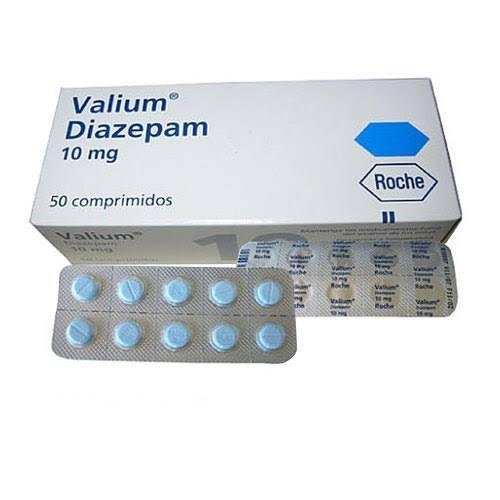
Valium Diazepam 10mg

$53.00
Valium (Diazepam) 10mg: A Potent Benzodiazepine
Valium (diazepam) 10mg is a prescription benzodiazepine medication, most commonly recognized by its original brand name, Valium. It is a potent, long-acting central nervous system (CNS) depressant with a wide range of clinical applications, including the treatment of severe anxiety disorders, acute alcohol withdrawal, muscle spasms, and certain seizure conditions.
It works by enhancing the effects of gamma-aminobutyric acid (GABA), the brain’s primary inhibitory neurotransmitter. This produces pronounced calming, sedative, muscle relaxant, and anticonvulsant effects.
Valium Diazepam 10mg: The Archetypal Benzodiazepine
Introduction
Few pharmaceuticals have achieved the cultural and medical footprint of Valium, the brand name for diazepam. The distinctive 10mg blue tablet, introduced by Roche in the early 1960s, became synonymous with a revolution in psychopharmacology and, later, a symbol of prescription drug dependency. Diazepam 10mg is not merely a dose of a medication; it represents the quintessential long-acting benzodiazepine, a class of drugs that profoundly reshaped the treatment of anxiety, insomnia, and a host of other conditions. Its story is one of immense therapeutic promise followed by a complex legacy of overprescription and societal reckoning with chemical coping. This comprehensive examination delves into the pharmacology, multifaceted uses, profound risks, and enduring place of diazepam 10mg in modern medicine.Valium Diazepam 10mg
Valium Diazepam 10mg
Chemical and Pharmacological Profile
Class and Mechanism of Action
Diazepam is the prototypical 1,4-benzodiazepine. Its mechanism of action is foundational to understanding not only its effects but also those of an entire drug class that followed.Valium Diazepam 10mg
GABAergic Potentiation: The brain’s primary inhibitory neurotransmitter is gamma-aminobutyric acid (GABA). Upon release, GABA binds to the GABA-A receptor, a ligand-gated chloride ion channel complex. This binding opens the channel, allowing an influx of chloride ions into the neuron, which hyperpolarizes the cell membrane and makes it resistant to excitation—effectively calming neuronal activity.Valium Diazepam 10mg
Diazepam acts as a positive allosteric modulator at a highly specific binding site on the GABA-A receptor. It does not directly stimulate the receptor. Instead, its binding increases the receptor’s affinity for GABA. When diazepam is present, the inhibitory signal produced by the brain’s own GABA is dramatically amplified. This global enhancement of inhibitory GABAergic tone across key regions of the central nervous system—particularly the limbic system (emotional center), the reticular formation (arousal), and the spinal cord—manifests as its quintuple effects: anxiolysis (anxiety reduction), sedation, muscle relaxation, anticonvulsant activity, and amnesia.
Pharmacokinetics: The “Long-Acting” Prototype
The pharmacokinetic profile of diazepam 10mg is its most defining clinical characteristic, explaining both its versatility and its dangers.
-
Absorption and Onset: Diazepam is rapidly and completely absorbed after oral administration, with peak plasma concentrations occurring within 30 to 90 minutes. This relatively quick onset contributes to its efficacy in calming acute anxiety episodes and panic.Valium Diazepum 10mg
-
Distribution: It is highly lipophilic, readily crossing the blood-brain barrier to exert swift CNS effects. It also rapidly redistributes into adipose (fat) tissue, which contributes to the termination of its acute CNS effects after a single dose, despite its long elimination half-life.Valium Diazepum 10mg
-
Metabolism (The Key to its Duration): Diazepam undergoes extensive hepatic metabolism via the cytochrome P450 system, primarily CYP2C19 and CYP3A4. This process is crucial because diazepam is metabolized into active metabolites:
-
Desmethyldiazepam (Nordazepam): The primary metabolite, which is equally or more potent than the parent compound as a tranquilizer.
-
Oxazepam: A further metabolite, which is itself an active benzodiazepine (marketed as Serax).
-
Temazepam: Another active intermediate metabolite (marketed as Restoril).
-
-
Elimination and Half-Life: This is where diazepam stands apart. The parent compound diazepam has a half-life of 20 to 50 hours. However, its active metabolite, desmethyldiazepam, has a half-life of 50 to 100 hours, and sometimes up to 200 hours. Therefore, with repeated dosing, these compounds accumulate, leading to a profoundly long clinical duration of action.Valium Diazepam 10mg
Clinical Implications of its Pharmacokinetics:
-
Smooth, Prolonged Effect: Provides steady symptom control without sharp peaks and troughs, making it historically favored for generalized anxiety.
-
Self-Tapering Potential: Its slow elimination can, in some controlled tapering scenarios, provide a built-in weaning effect.
-
Drug Accumulation: With daily dosing, significant accumulation occurs, leading to increased sedation, cognitive impairment, and fall risk, especially in the elderly.
-
Next-Day and Persistent Impairment: Residual drowsiness, slowed reflexes, and “brain fog” are common and can last days after the last dose.Valium Diazepam 10mg
-
Significant Drug Interactions: As a CYP450 substrate, its levels are affected by numerous inhibitors (e.g., fluoxetine, ketoconazole) and inducers (e.g., carbamazepine, St. John’s Wort).Valium Diazepam 10mg
-
Clinical Applications and Therapeutic Uses
The 10mg strength of diazepam has been employed across a remarkably broad therapeutic spectrum, a testament to its potent and versatile pharmacology. Its use today is far more restricted and nuanced than in its heyday.
1. Anxiety Disorders and Acute Anxiety
Historically, it was a first-line treatment for generalized anxiety disorder (GAD), panic disorder, and situational anxiety. Its rapid onset and long duration made it effective for quelling acute panic attacks and providing sustained relief. However, due to the high risk of dependence and the availability of safer first-line treatments (like SSRIs and SNRIs), its role is now typically limited to:Valium Diazepam 10mg
-
Short-term crisis intervention during an extreme anxiety episode.
-
Adjunct therapy in the initial weeks of starting an SSRI, before the antidepressant takes full effect.
2. Skeletal Muscle Relaxation
Diazepam’s action at the spinal cord level enhances presynaptic inhibition, reducing muscle tone and spasm. It is effective as an adjunct for:
-
Acute musculoskeletal pain and spasm (e.g., lower back pain).
-
Spasticity associated with upper motor neuron disorders like cerebral palsy, multiple sclerosis, and spinal cord injury (though often superseded by more selective agents like baclofen or tizanidine).Valium Diazepam 10mg
3. Alcohol Withdrawal Syndrome
It remains a cornerstone of management for moderate to severe alcohol withdrawal. Its cross-tolerance with alcohol, long duration of action, and anticonvulsant properties make it ideal for:Valium Diazepam 10mg
-
Preventing and treating delirium tremens (DTs).
-
Preventing alcohol withdrawal seizures.
-
Providing a controlled, tapering dose of a CNS depressant to safely wean the brain off alcohol.
4. Status Epilepticus
As a potent anticonvulsant, intravenous diazepam (or its rectal gel formulation) is a first-line emergency treatment for ongoing, life-threatening seizures (status epilepticus). Its rapid brain penetration is critical for stopping seizure activity quickly.Valium Diazepum 10mg
5. Preoperative Sedation
Its anxiolytic and amnestic properties make it useful for premedication before surgical or endoscopic procedures to reduce anxiety and provide anterograde amnesia for the event.
6. Insomnia (Largely Historical)
While effective for sleep initiation due to its sedative properties, its long half-life causes significant next-day impairment. It has been largely abandoned as a hypnotic in favor of shorter-acting agents, and more appropriately, non-pharmacological interventions.Valium Diazepam 10mg
Dosage and Administration
The 10mg tablet is a standard adult dose for many indications, but dosing is highly indication-specific and individualized.
General Guidelines:
-
Anxiety/Muscle Spasm: 2mg to 10mg, 2 to 4 times daily. Treatment should be for the shortest effective duration, often just 2-4 weeks.Valium Diazepam 10mg
-
Alcohol Withdrawal: Dosing is aggressive and individualized, often using a symptom-triggered or fixed-schedule taper protocol in an inpatient setting (doses can exceed 40mg in the first 24 hours).
-
Elderly/Debilitated Patients: Extreme caution is required. A starting dose of 2mg to 2.5mg, once or twice daily, is common due to increased sensitivity, reduced metabolism, and higher risk of falls and confusion.
-
Contraindication with Opioids: Concomitant use is contraindicated except in rare, life-saving circumstances under strict monitoring, due to the black box warning for fatal respiratory depression.
Side Effects and Adverse Reactions
The adverse effects of diazepam 10mg are a direct and often exaggerated reflection of its therapeutic CNS depression.
Common Side Effects:
-
Central Nervous System: Drowsiness, fatigue, dizziness, ataxia (staggering gait), slurred speech, blurred vision, and profound anterograde amnesia (inability to form new memories while the drug is active).
-
Psychiatric: Paradoxical disinhibition reactions, including increased anxiety, agitation, rage, aggression, hallucinations, and insomnia. These are more common in children, the elderly, and individuals with personality disorders.Valium Diazepam 10mg
-
Gastrointestinal: Constipation, nausea, dry mouth.
-
Neuromuscular: Muscle weakness, lack of coordination.
Serious and Dangerous Adverse Effects:
-
Respiratory Depression: Diazepam suppresses the brainstem’s respiratory drive. This effect becomes synergistically fatal when combined with other CNS depressants like alcohol, opioids, or barbiturates. The opioid combination carries a FDA Boxed Warning.Valium Diazepam 10mg
-
Profound Physical and Psychological Dependence: Tolerance (requiring more drug for the same effect) and dependence can develop within weeks of regular therapeutic use. Addiction, characterized by compulsive use despite harm, is a significant risk.
-
Severe, Protracted Withdrawal Syndrome: Abrupt discontinuation after chronic use is medically dangerous. Withdrawal symptoms, stemming from a hyperexcitable CNS, include:
-
Early: Rebound anxiety, insomnia, agitation.
-
Peak: Autonomic hyperactivity (sweating, tachycardia, hypertension), tremors, nausea/vomiting, perceptual distortions, depersonalization.
-
Severe/Life-Threatening: Grand mal seizures, delirium tremens, psychosis. Due to its long half-life, withdrawal onset may be delayed by 2-7 days but can be exceptionally prolonged and severe.Valium Diazepam 10mg
-
-
Cognitive and Psychomotor Impairment: Chronic use is associated with persistent deficits in memory, attention, and executive function. It severely impairs driving ability and operation of machinery.
-
Increased Fall and Fracture Risk: A major cause of morbidity in the elderly, due to sedation, ataxia, and dizziness.
-
Tolerance: The body adapts, diminishing therapeutic effects and fostering dose escalation.Valium Diazepam 10mg
Contraindications and Major Drug Interactions
Absolute Contraindications:
-
Hypersensitivity to diazepam or other benzodiazepines.
-
Concurrent use with opioids (except in exceptional, monitored settings).
-
Myasthenia gravis.
-
Severe respiratory insufficiency (e.g., severe COPD, sleep apnea).
-
Acute narrow-angle glaucoma.
-
Pregnancy (risk of cleft palate, neonatal flaccidity, and withdrawal syndrome) and breastfeeding.
Major Drug Interactions:
Diazepam’s metabolism and additive CNS effects create a minefield of interactions.Valium Diazepam 10mg
-
Alcohol & Other CNS Depressants: Profoundly additive sedation and respiratory depression.
-
Opioids: Contraindicated due to risk of fatal respiratory arrest.
-
CYP450 Inhibitors: Drugs like fluoxetine, ketoconazole, cimetidine, and oral contraceptives can dramatically increase diazepam levels by inhibiting its breakdown.
-
CYP450 Inducers: Drugs like carbamazepine, rifampin, and phenytoin can decrease diazepam levels, reducing efficacy and potentially triggering withdrawal in dependent individuals.
-
Other Protein-Bound Drugs: Diazepam is highly protein-bound and can be displaced by drugs like warfarin, though this is less clinically significant than its metabolic interactions.Valium Diazepam 10mg
Dependence, Tolerance, and the Withdrawal Crisis
The story of diazepam 10mg is inextricably linked to iatrogenic dependence. Its capacity to induce a profound state of physiological need is arguably its most significant characteristic.
Tolerance: Neuroadaptation occurs swiftly. The brain downregulates GABA-A receptors and upregulates excitatory systems in response to constant benzodiazepine presence. The calming 10mg dose becomes ineffective, creating a powerful incentive to increase dosage.Valium Diazepam 10mg
Physical Dependence: A state where the CNS requires the drug to maintain homeostasis. The brain’s GABA systems become unable to function normally without the exogenous enhancer.Valium Diazepum 10mg
Withdrawal Syndrome: Cessation unleashes a rebound hyperglutamatergic state. The severity is influenced by dose, duration, and the drug’s half-life. Diazepam’s long half-life can delay onset but often leads to a protracted withdrawal syndrome lasting months, characterized by persistent anxiety, insomnia, sensory hypersensitivity, and dysphoria.
Management of Dependence: Discontinuation is a medical procedure, not a simple act of will. Abrupt cessation is contraindicated. A slow, patient-controlled taper is the gold standard, often reducing the dose by 5-10% every 1-2 weeks. The Ashton Manual, developed by Prof. Heather Ashton, provides detailed protocols for converting various benzodiazepines to a diazepam equivalent dose for a smoother taper, leveraging its long half-life.
Societal Impact and Regulatory Context
Diazepam was launched in 1963 and became the most prescribed medication in the United States and much of the Western world throughout the late 1960s and 1970s. It was marketed as a safe and effective “emotional aspirin,” a calming solution for the stresses of modern life, particularly for women. Its cultural saturation was immortalized in songs and literature.
The 1970s and 1980s brought a reckoning. Recognition of widespread dependence, withdrawal, and abuse led to its classification as a Schedule IV controlled substance in the U.S. Controlled Substances Act of 1970, indicating a legitimate medical use but a significant potential for abuse and dependence. Prescribing patterns shifted dramatically. It is no longer a first-line treatment for anxiety or insomnia. Modern guidelines emphasize:
-
SSRIs/SNRIs as first-line pharmacotherapy for anxiety disorders.
-
Cognitive Behavioral Therapy (CBT) as a cornerstone of treatment.Valium Diazepum 10mg
-
Benzodiazepines like diazepam as short-term crisis tools or specialized agents (e.g., for alcohol withdrawal, status epilepticus).Valium Diazepam 10mg
Conclusion
Valium (diazepam) 10mg is more than a medication; it is a landmark in pharmaceutical history. It exemplifies the potent efficacy and perilous dark side of the benzodiazepine class. Its unique pharmacokinetics—providing long, smooth action through an active metabolite—granted it wide utility but also created a perfect storm for accumulation, dependence, and a torturous withdrawal syndrome.Valium Diazepam 10mg
In contemporary practice, its role is rightly circumscribed. The 10mg tablet is no longer a casual prescription for daily nerves. It is a potent tool reserved for specific,Valium Diazepum 10mg often acute, situations: managing severe alcohol withdrawal, controlling life-threatening seizures, providing short-term cover in a psychiatric crisis,Valium Diazepum 10mg or as a last-resort muscle relaxant. Its use demands immense respect,Valium Diazepam 10mg a clear understanding of its pharmacokinetic footprint, vigilant monitoring for dependence, and an unwavering commitment to using the lowest effective dose for the shortest possible time. Diazepam 10mg stands as a powerful testament to the principle that in medicine, profound efficacy and profound risk are often inseparable companions.Valium Diazepam 10mg
| quantity | 100 pills |
|---|
Be the first to review “Valium Diazepam 10mg” Cancel reply
Related products
Uncategorized
Pain Relief

Pain Relief
Pain Relief
Uncategorized
sleeping pills
Reviews
There are no reviews yet.