
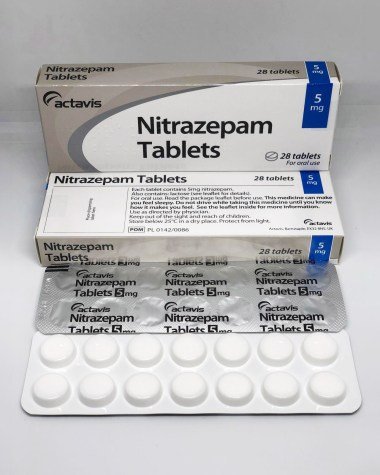
Nitrazepam 10mg

$55.00
Nitrazepam 10mg is a prescription benzodiazepine medication primarily used for the short-term treatment of severe insomnia. It works by enhancing the effect of a calming chemical (GABA) in the brain, promoting deep sedation, muscle relaxation, and helping to initiate and maintain sleep.
Nitrazepam 10mg: A Comprehensive Guide to Uses, Pharmacology, and Risks
Introduction
Nitrazepam, marketed under brand names such as Mogadon, is a benzodiazepine medication with potent sedative, hypnotic, anxiolytic, and muscle relaxant properties. The 10mg dosage represents a standard therapeutic strength primarily indicated for the short-term management of severe, debilitating insomnia. As a member of the benzodiazepine class—a group of drugs that gained widespread use in the latter half of the 20th century—nitrazepam’s history is intertwined with both the therapeutic promise and the subsequent public health concerns associated with these compounds. This comprehensive guide delves into the pharmacology, clinical applications, risks, and societal impact of nitrazepam 10mg, providing an essential resource for understanding this powerful hypnotic agent.Nitrazepam 10mg USA
Chemical and Pharmacological Profile
Class and Mechanism of Action
Nitrazepam is classified as a 1,4-benzodiazepine. Its core mechanism of action, shared with all drugs in its class, is the positive allosteric modulation of the gamma-aminobutyric acid (GABA)-A receptor in the central nervous system (CNS).Nitrazepam 10mg USA
GABAergic System Primer: GABA is the primary inhibitory neurotransmitter in the mammalian brain. When released, it binds to the GABA-A receptor, a ligand-gated chloride ion channel. This binding opens the channel, allowing chloride ions to flow into the neuron, hyperpolarizing it and making it less likely to fire. This results in a generalized dampening of neuronal excitability, producing calming, sedative, and anti-anxiety effects.Nitrazepam 10mg USA
Nitrazepam’s Specific Action: Nitrazepam does not directly stimulate the GABA-A receptor. Instead, it binds to a specific, highly conserved site on the receptor complex. This binding enhances the affinity of GABA for its own binding site. In practical terms, when nitrazepam is present, the inhibitory effect of any GABA released is significantly magnified. This leads to a greater influx of chloride ions and a more pronounced inhibitory signal. The primary therapeutic effect for insomnia—sedation—stems from this amplified inhibitory tone in key brain regions, including the limbic system, thalamus, and hypothalamus.
Pharmacokinetics: Absorption, Distribution, Metabolism, Excretion
Understanding how the body processes nitrazepam 10mg is crucial for comprehending its effects and duration.
-
Absorption: Nitrazepam is well absorbed from the gastrointestinal tract after oral administration. Peak plasma concentrations are typically reached within 2 to 4 hours post-ingestion. The presence of food can slow absorption but does not ultimately reduce the total amount absorbed.
-
Distribution: It is highly lipophilic, meaning it readily crosses the blood-brain barrier to exert its CNS effects. It also has a relatively large volume of distribution, indicating it disperses widely into body tissues.
-
Metabolism: Nitrazepam is primarily metabolized in the liver via nitro-reduction, a process mediated by microbial flora in the gut and hepatic enzymes, followed by acetylation. Notably, it is not metabolized by the cytochrome P450 system to a significant degree. This can be an important differentiator from other benzodiazepines (like diazepam or alprazolam), as it means its metabolism is less susceptible to direct interactions with the multitude of drugs that inhibit or induce CYP450 enzymes. However, its metabolism can still be affected by drugs that influence nitro-reductase activity.
-
Elimination and Half-Life: Nitrazepam has a long elimination half-life, ranging from 20 to 40 hours in most adults. This is a critical characteristic. Its active metabolites (primarily 7-aminonitrazepam and 7-acetamidonitrazepam) also have significant half-lives. This prolonged presence in the body explains several key clinical features:
-
Effective Sleep Maintenance: It helps prevent early morning awakenings.Nitrazepam 10mg USA
-
Next-Day Sedation (“Hangover” Effect): Residual drowsiness, impaired psychomotor performance, and cognitive blunting are common, especially upon initiation of therapy.
-
Cumulative Effects: With repeated nightly dosing, the drug can accumulate in the body, particularly in the elderly or those with liver impairment, leading to increasing sedation and confusion over successive days.
-
Clinical Applications and Therapeutic Uses
The primary and most well-established indication for nitrazepam 10mg is the short-term treatment of severe, disabling insomnia. The definition of “short-term” is paramount here; international guidelines typically recommend a duration not exceeding 2 to 4 weeks. This limitation is due to the rapid development of tolerance (diminished effect with continued use) and the high risk of dependence.
1. Treatment of Insomnia
Nitrazepam is reserved for cases where insomnia is severe, causes significant distress, and impairs daytime functioning. Its long half-life makes it particularly suited for individuals who have trouble both falling asleep (sleep latency) and staying asleep (sleep maintenance). It increases total sleep time and reduces nighttime awakenings. However, it often negatively alters sleep architecture, particularly by suppressing deep, restorative slow-wave sleep (Stage N3) and rapid eye movement (REM) sleep.
2. Adjunct in the Management of Epilepsy
While not a first-line anticonvulsant, nitrazepam has potent antiseizure properties. It is sometimes used as an adjunctive therapy, particularly in specific syndromes:
-
Infantile Spasms (West Syndrome): It has been a historical treatment, though adrenocorticotropic hormone (ACTH) and vigabatrin are now more commonly first-line.
-
Myoclonic Seizures: Its efficacy can be beneficial in certain progressive myoclonic epilepsies.
-
Status Epilepticus: In some protocols, it may be used as an alternative when first-line benzodiazepines (like lorazepam or diazepam) are unavailable.
3. Premedication in Anesthesia
Due to its pronounced sedative and anxiolytic effects, nitrazepam has been used as a premedication before surgical or dental procedures to reduce preoperative anxiety and promote amnesia for the event.
4. Muscle Spasm and Related Disorders
Its muscle relaxant properties can provide relief in conditions characterized by acute skeletal muscle spasm, such as those caused by injury or inflammatory conditions like lower back pain. However, due to its strong sedative profile, other benzodiazepines with a more favorable relaxant-to-sedation ratio (e.g., tetrazepam) or non-benzodiazepine agents are often preferred.
Dosage and Administration
The standard adult dose for insomnia is 5mg to 10mg taken orally, once daily, immediately before bedtime. The lower 5mg dose is often initiated to assess tolerance, particularly in older or debilitated patients.
Critical Administration Guidelines:
-
Timing: Must be taken right before bed. Patients must ensure they have 7-8 hours dedicated to sleep to minimize the risk of next-day impairment.
-
Duration: Strictly short-term. Prescribers are advised to reassess the patient regularly and encourage non-pharmacological sleep strategies (cognitive behavioral therapy for insomnia, or CBT-I, is the first-line treatment).
-
Elderly/Debilitated Patients: A lower initial dose of 2.5mg to 5mg is strongly recommended due to increased sensitivity, reduced clearance, and higher risk of adverse effects like confusion, ataxia, and falls.
-
Hepatic/Renal Impairment: Dose reduction is necessary due to impaired metabolism and excretion.
Side Effects and Adverse Reactions
The adverse effect profile of nitrazepam 10mg is an extension of its therapeutic CNS depression. They are dose-dependent and more common at initiation of therapy.
Common Side Effects:
-
Central Nervous System: Drowsiness, sedation, dizziness, fatigue, ataxia (unsteady gait), slurred speech, confusion, and impaired concentration/memory (anterograde amnesia).
-
Psychiatric: “Paradoxical reactions” such as increased anxiety, agitation, aggression, irritability, and vivid or disturbing dreams can occur, especially in the elderly and children.
-
Neuromuscular: Muscle weakness, lack of coordination.Nitrazepam 10mg
-
Gastrointestinal: Dry mouth, nausea, constipation.
Serious and Dangerous Adverse Effects:
-
Respiratory Depression: This is the most dangerous acute adverse effect. Nitrazepam can suppress the brainstem’s respiratory drive. The risk is potentiated exponentially when combined with other CNS depressants like alcohol, opioids, or other sedatives, potentially leading to fatal overdose.Nitrazepam 10mg
-
Profound Dependence and Addiction: Both physiological and psychological dependence develop with regular use, often within weeks.Nitrazepam 10mg USA
-
Severe Withdrawal Syndrome: Abrupt discontinuation after chronic use can trigger a life-threatening withdrawal syndrome including rebound insomnia and anxiety, tremors, sweating, nausea, perceptual disturbances, and in severe cases, seizures and delirium.Nitrazepam 10mg
-
Cognitive Impairment: Chronic use is associated with persistent deficits in attention, memory, and executive function, which may not be fully reversible.
-
Increased Fall Risk: A major concern in the elderly, leading to hip fractures and associated morbidity/mortality.Nitrazepam 10mg USA
-
Tolerance: The hypnotic effects diminish with continued use, often leading patients to escalate the dose without medical advice.
Contraindications and Major Drug Interactions
Absolute Contraindications:
-
Known hypersensitivity to nitrazepam or other benzodiazepines.
-
Myasthenia gravis (can exacerbate muscle weakness).Nitrazepam 10mg
-
Severe respiratory insufficiency (e.g., severe COPD, sleep apnea).
-
Acute pulmonary insufficiency.Nitrazepam 10mg
-
Severe hepatic impairment.Nitrazepam 10mg
-
Pregnancy and breastfeeding (risk of neonatal flaccidity, withdrawal syndrome, and teratogenicity).
Major Drug Interactions:
Nitrazepam’s CNS depressant effects are additive or synergistic with other depressants. Concomitant use is hazardous:
-
Alcohol: Markedly increases sedation and overdose risk.
-
Opioids (e.g., oxycodone, morphine): The combination is a leading cause of fatal overdose due to profound respiratory depression. FDA mandates a Boxed Warning on this interaction.Nitrazepam 10mg
-
Other CNS Depressants: Including barbiturates, other benzodiazepines, sedating antidepressants (e.g., trazodone, mirtazapine), antipsychotics, and anticonvulsants.Nitrazepam 10mg
-
Drugs Affecting Nitro-Reductase Activity: While not a CYP450 substrate, its metabolism may still be inhibited or induced by other compounds.Nitrazepam 10mg
The Risk of Dependence, Tolerance, and Withdrawal
This is the single most critical aspect limiting the use of nitrazepam and all benzodiazepines.
Tolerance: The brain adapts to the persistent enhancement of GABAergic signaling. Downregulation of GABA-A receptors and other compensatory mechanisms mean that over time, the same 10mg dose produces a weaker hypnotic effect. This can lead to dose escalation.Nitrazepam 10mg
Dependence: A state where the body requires the continued presence of the drug to function normally. Discontinuation leads to a withdrawal syndrome.
Withdrawal Syndrome: Symptoms are essentially the rebound hyperexcitability of the CNS after being chronically suppressed. They can appear within 1-3 days of stopping a long-acting drug like nitrazepam and last for weeks or even months in a protracted withdrawal syndrome.
-
Mild: Rebound insomnia and anxiety, restlessness, irritability.Nitrazepam 10mg
-
Moderate: Sweating, tachycardia, nausea, tremors, hypersensitivity to light and sound.
-
Severe (Medical Emergency): Hallucinations, depersonalization, psychosis, grand mal seizures.
Management of Dependence: Patients on long-term nitrazepam must never stop abruptly. A slow, gradual tapering schedule under medical supervision is essential. The long half-life of nitrazepam can sometimes be leveraged in a taper, or a switch to an equivalent dose of a long-acting benzodiazepine like diazepam may be used for a more controlled reduction.Nitrazepam 10mg
Societal Impact and Regulatory Status
Nitrazepam, like many benzodiazepines, transitioned from being hailed as a wonder drug for anxiety and sleep in the 1960s and 70s to being recognized as a major driver of prescription drug dependence. Its high potential for abuse, diversion, and addiction has led to its placement as a Schedule IV controlled substance under the United Nations Convention on Psychotropic Substances and similarly controlled in most countries (e.g., Schedule 4 in the UK, Schedule IV in the US under the Controlled Substances Act).
Prescribing trends have shifted dramatically. It is no longer a first-line treatment for insomnia. “Z-drugs” (zolpidem, zopiclone), while having similar risks, were initially marketed as safer alternatives. Modern clinical guidelines emphatically prioritize Cognitive Behavioral Therapy for Insomnia (CBT-I) as the first-line and most durable treatment, with hypnotic medications like nitrazepam reserved for severe, short-term crises.Nitrazepam 10mg
Conclusion
Nitrazepam 10mg is a potent long-acting benzodiazepine hypnotic with a clear but narrow therapeutic role. Its ability to enforce sleep is counterbalanced by a formidable profile of risks: next-day impairment, tolerance, profound physiological dependence, a dangerous withdrawal syndrome, and significant potential for fatal interactions, particularly with opioids. Its use in modern medicine is, and should be, highly restricted—limited to severe, short-term insomnia where the benefits are judged to outweigh the considerable risks, and always under the closest medical supervision with a clear exit plan. Understanding nitrazepam requires acknowledging both its potent pharmacological effects and the serious public health lessons learned from the benzodiazepine era. It serves as a powerful tool in the therapeutic arsenal but also as a cautionary tale about the perils of chronic CNS suppression for the management of sleep disorders.
| quantity | 50 pills |
|---|
4 reviews for Nitrazepam 10mg
Add a review
Related products

sleeping pills

sleeping pills

sleeping pills

sleeping pills

sleeping pills

sleeping pills

sleeping pills

sleeping pills

Rhinehart –
Nitrazepam 10mg from pillsunit.com—20min to heavy sleep, 9+hrs bliss. Burnout recovery gold.
Adeline “Addie” March –
10mg Nitrazepam silences mind races—deep REM, sharp AM. pillsunit.com consistent potency
Miles Danforth –
Chronic insomnia gone with Nitrazepam 10mg—smooth strong sedation. Secure pillsunit.com
Beatrice “Bea” Shepard –
Nitrazepam 10mg for tough nights—25min onset, total rest. pillsunit.com flawless source